RV Rental Management SoftwareRun Rentals on Your Terms.
Own the Booking. Own the Customer. Own the Revenue.
Direct booking, rental operations, protection, renter insurance, mobile check-in and check-out, support and claims in one experience for dealers and professional fleet operators.
RV is the primary launch experience today. The platform is structured for multiple specialty rental verticals.
Built for the way you rent.
One platform, one operating model. The assets and the language change; the system does not.
Launch vertical
Recreational Vehicles
The deepest proof base today. Dealers put existing inventory online, rent it direct from their own website, protect the unit through the trip and keep the customer afterwards.
Vertical asset swap — RV
The problem
Most rental operations are held together by eight things that do not talk to each other.
Every disconnect is a place where the booking record, the money or the customer goes missing.
One booking record. One connected workflow. One renter experience.
One connected rental journey
Discovery through repeat business, on one record.
Most rental software stops at the reservation. Follow the whole lifecycle and see where the revenue and the customer actually live.
Protect Your Inventory. Protect Your Profit. Protect Your Customers.
Three things every rental operation is trying to hold onto at once. Pick one and see what the connected system actually does about it.
Most rental software stops at the reservation. This continues through the trip, claims, support, return and repeat business, and adds monetization inside the same journey.
Monetize it. Rent it. Protect it. Preserve it. Resell it.
The asset is an economic lifecycle, not a booking.
Back to market with a fuller record, then into the next cycle.
The revenue layer
Protection should not just reduce friction. It should create revenue.
Rental VSCs are built into the rental transaction itself, which lets participating dealers and professional operators offer trip-based protection and share in revenue from eligible plan sales.
The operating system
Eight parts of a rental operation. One system.
Not a suite of products you integrate yourself. One connected experience your renter never sees the seams of.
Path A — Start a rental department
You already have the inventory, the customers and the website.
What you do not have is a rental department. That is infrastructure, not ambition, and it is the part we supply.
Step 01
Put inventory onlineUnits go onto your own site through the web component. No marketplace listing required.Step 02
Set your rulesRates, availability, minimums, add-ons and who can rent what.Step 03
Protection and insuranceRental VSCs and the renter insurance path are configured into the booking flow.Step 04
Lot operationsYour team runs check-out and check-in from a phone, with condition captured every time.Step 05
Trip supportThe renter has support, roadside and incident reporting while the unit is out.Step 06
Repeat, and renter to buyerThe customer stays yours. Some of them buy the category they just rented.- 01Inventory online
- 02Your rules
- 03Protection
- 04Lot operations
- 05Trip support
- 06Repeat & renter to buyer
Playbooks and best practices are attached below.
- Trades: units taken on trade that would otherwise sit, earning while they wait for a buyer
- Consignment: renting owned inventory you do not carry the floor cost on
- Past clients: the customers who already bought from you are the easiest first renters
- Inventory strategy: which units to put in the rental fleet, and when to move them back to the sales line
Path B — Upgrade an existing operation
Stop renting through somebody else’s customer relationship.
You are already renting. The question is who owns the booking, the customer and the revenue when the trip is over.
Today
- The marketplace owns the traffic and usually the customer
- Generic rental software that stops at the reservation
- Payments reconciled in a separate place
- Insurance bought and verified somewhere else again
- Condition photos in a folder, not on the booking
- Roadside and claims handled by whoever answers the phone
On the platform
- Bookings come through your own website, in your own brand
- One record from discovery through to repeat business
- Payment and documentation on that same record
- Renter insurance path built into the flow
- Condition captured on the booking at check-out and check-in
- Support and claims connected to the trip they belong to
- Protection revenue on eligible bookings you are already taking
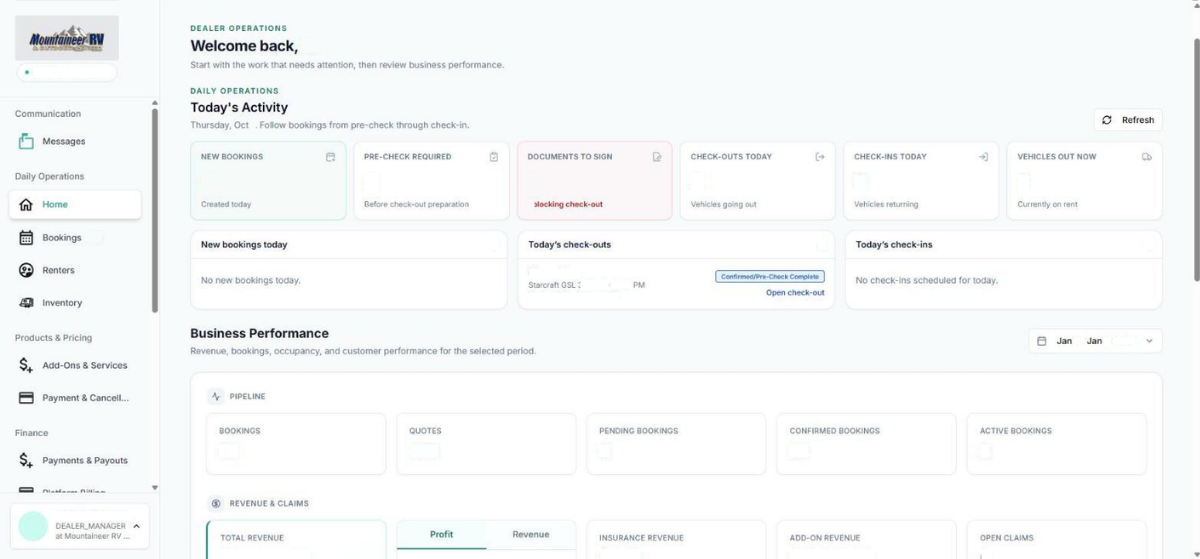
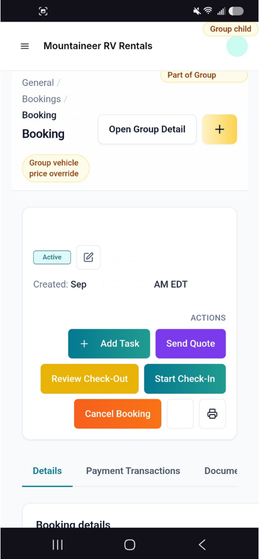
Product tour
Choose your role. See your screen.
Built from dealer, F&I and professional rental experience.
This was not designed by people guessing at how a rental department runs. RV is the deepest proof layer today.
Questions worth asking first
Ready to run rentals on your terms?
Fifteen minutes is enough to work out whether this is a rental department you should be running.